
Men's Prostate Health After 45 — What Changes and What to Do
Most Kenyan men over 45 will notice something change in how they urinate. Most of those changes are benign and age-related. A few are not, and telling the difference is a job for a clinician rather than a website — but knowing what to look for is worth ten minutes.
Farma360 editorial team · reviewed against our editorial policy

What the prostate does and how it changes
The prostate is a walnut-sized gland sitting below the bladder and surrounding the urethra, the tube urine passes through. Its job is to produce part of the fluid in semen. Its position is what makes it clinically significant: anything that increases its size presses on the tube running through it.
From roughly the fourth decade, the prostate gradually enlarges in most men. This is benign prostatic hyperplasia — benign meaning not cancer, hyperplasia meaning increase in cell number. It is not a disease in the sense of something going wrong; it is a near-universal age-related change. What varies enormously is how much symptom it produces.
The symptoms that are common and usually benign
These are the changes that bring men to a page like this one. They are worth mentioning to a doctor at your next visit, but they are not emergencies.
- Getting up at night to urinate, once or more
- A stream that takes a moment to start
- A weaker stream than you remember
- Dribbling at the end
- A sense that the bladder has not fully emptied
- Needing to go more often during the day, or more urgently

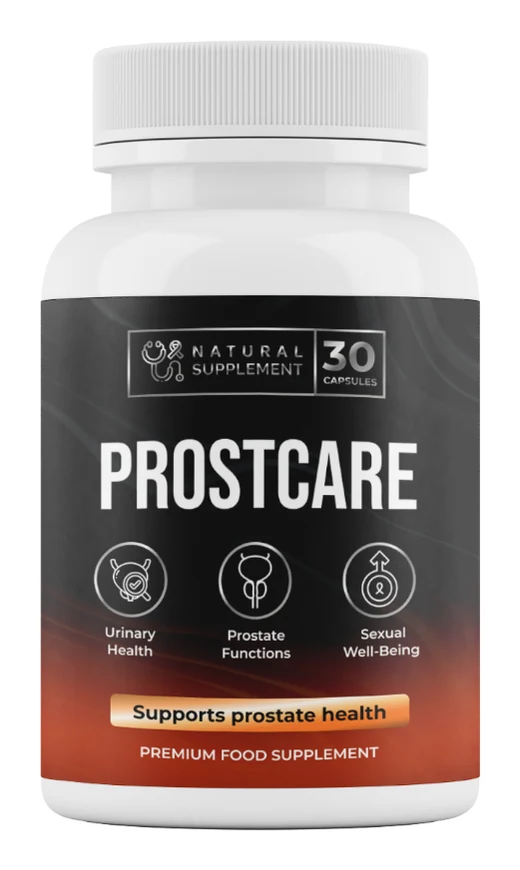
Order ProstCare at the launch price
Saw palmetto, green tea, lycopene and curcumin. Name and phone only — an agent confirms the order by call and you pay the courier when the parcel reaches you.
KSh 4,999 KSh 9,998 −50% launch price
The symptoms that need a doctor this week
This list is short and it matters more than everything else on this page. None of these should be managed with a supplement, and none should be waited out.
- Blood in urine or in semen
- Complete inability to pass urine — this is an emergency
- Pain on urination that is worsening, especially with fever
- Fever with lower back or pelvic pain
- Unexplained weight loss alongside urinary symptoms
- Bone pain, particularly in the lower back or hips, with urinary changes
Screening in Kenya, practically
Two things are typically done: a PSA blood test, and a digital rectal examination. The examination takes seconds and men avoid it for reasons that have nothing to do with how unpleasant it actually is. Both are available through public and private facilities across Kenya, and both are quick.
PSA has genuine limitations worth knowing before you have it done. It can be raised by benign enlargement, by infection, by recent ejaculation and by a recent examination, and it can be normal in the presence of cancer. It is a useful test interpreted alongside other information, not a verdict on its own. Your doctor will explain what your number means in your context, and that conversation is the point of the test.

What actually helps day to day
Several practical measures reduce night-time frequency for many men, and they cost nothing. They are worth trying properly for a few weeks before concluding anything about a supplement.
- Stop drinking fluids two hours before bed
- Reduce caffeine and alcohol, particularly in the evening — both irritate the bladder
- Empty the bladder fully rather than in a hurry, and try again a minute later
- Break up long periods of sitting; long-distance drivers are particularly affected
- Keep moving generally — activity is associated with better urinary symptom scores
- Manage weight, since abdominal weight increases pressure on the bladder
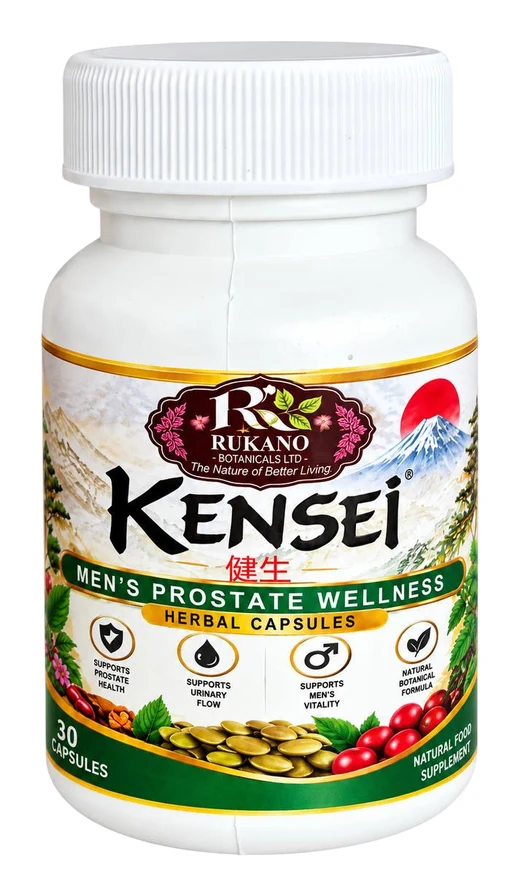
Ready to order Kensei?
Listed at the launch price with delivery quoted on the confirmation call. Nothing is charged until the parcel reaches you.
KSh 6,480 KSh 12,960 −50% launch price
Where nutrition and supplements fit
A diet with regular cooked tomato is the most consistently observed dietary association with prostate health, largely attributed to lycopene, the carotenoid that concentrates in prostate tissue. Cooked tomato delivers more available lycopene than raw, and a little oil in the cooking improves absorption further. Pumpkin seeds, oily fish and green vegetables round out the general picture.
Supplements in this category are built around similar logic — saw palmetto, plant sterols, lycopene, antioxidant compounds. The honest position on the evidence is that it is mixed: some trials of saw palmetto report improvement in urinary symptom scores, others find no difference from placebo. That is not a reason to dismiss the category, and it is not a reason to expect a transformation.
Where a supplement definitely does not belong is in place of an assessment. If you have had the check and the finding is benign enlargement, a supplement alongside the practical measures above is a reasonable thing to try. If you have not had the check, have it first.
A note on the conversation itself
The most common reason Kenyan men delay a prostate examination is not the examination. It is the conversation — raising something private at a busy clinic, in a queue, with people within earshot.
That is a real barrier and worth planning around rather than pretending it does not exist. Book an appointment rather than walking in, ask for a private consultation room, and if it helps, write down what you want to say before you go. Clinicians have this conversation constantly and think nothing of it.
Products related to this topic
Prostate
Prostaline
Prostate and urinary comfort capsules
4.7 · 12 published reviews
KSh 6,600 KSh 13,200 −50%
Nothing above treats a medical condition. See all supplements or read our editorial policy for how we decide what to publish.
Questions and answers
At what age should Kenyan men start prostate checks?
General guidance places the conversation around 50 for most men, and earlier — from about 45 — for men with a family history of prostate cancer or of African descent, both of which raise risk. Discuss timing with your doctor rather than deciding alone.
Is getting up at night to urinate normal after 50?
It is very common and usually related to benign prostate enlargement, but common is not the same as ignorable. Mention it at your next appointment, and treat blood in urine, fever or inability to pass urine as urgent regardless.
Do prostate supplements work?
Evidence for the botanicals used in this category is mixed. Some trials report modest improvement in urinary symptom scores, others find no difference from placebo. They are positioned as support for normal function, never as treatment.
Does a high PSA mean cancer?
No. PSA can be raised by benign enlargement, infection, recent ejaculation or a recent examination. It is interpreted by a clinician alongside other findings, not read as a verdict.
Can diet affect prostate health?
Diets high in cooked tomato products are the most consistently observed association, attributed to lycopene. General dietary quality, weight and activity all matter too. Diet is supportive, not preventive in any guaranteed sense.
Related guides
Joint Pain and Staying Mobile — A Practical Guide
Knees on stairs, a back that seizes after a long matatu ride, shoulders that complain after a day of lifting. Joint pain is one of the most …
Blood Pressure — What the Numbers Mean and What Moves Them
High blood pressure is common in Kenya and frequently undiagnosed, for one simple reason: it produces no reliable symptoms. Most people with…
Back to all guides or the Farma360 home page.
Important. This guide is general information about food supplements and everyday health, not medical advice, and it does not replace consultation with a clinician. Never stop or change prescribed medication because of anything you read here. Medicines in Kenya are regulated by the Pharmacy and Poisons Board.